SDH
The specifications of this website will also extend to the planned regulations for Veri*Factu (AEAT), TicketBAI Gipuzkoa and Araba, Batuz Bizkaia, NaTicket (Navarra), SII and B2B Electronic Invoicing.
It is important to distinguish between Tax Reporting and Electronic Invoicing. Although both processes are related to issuing invoices or receipts, they are governed by different regulations and must be treated independently.
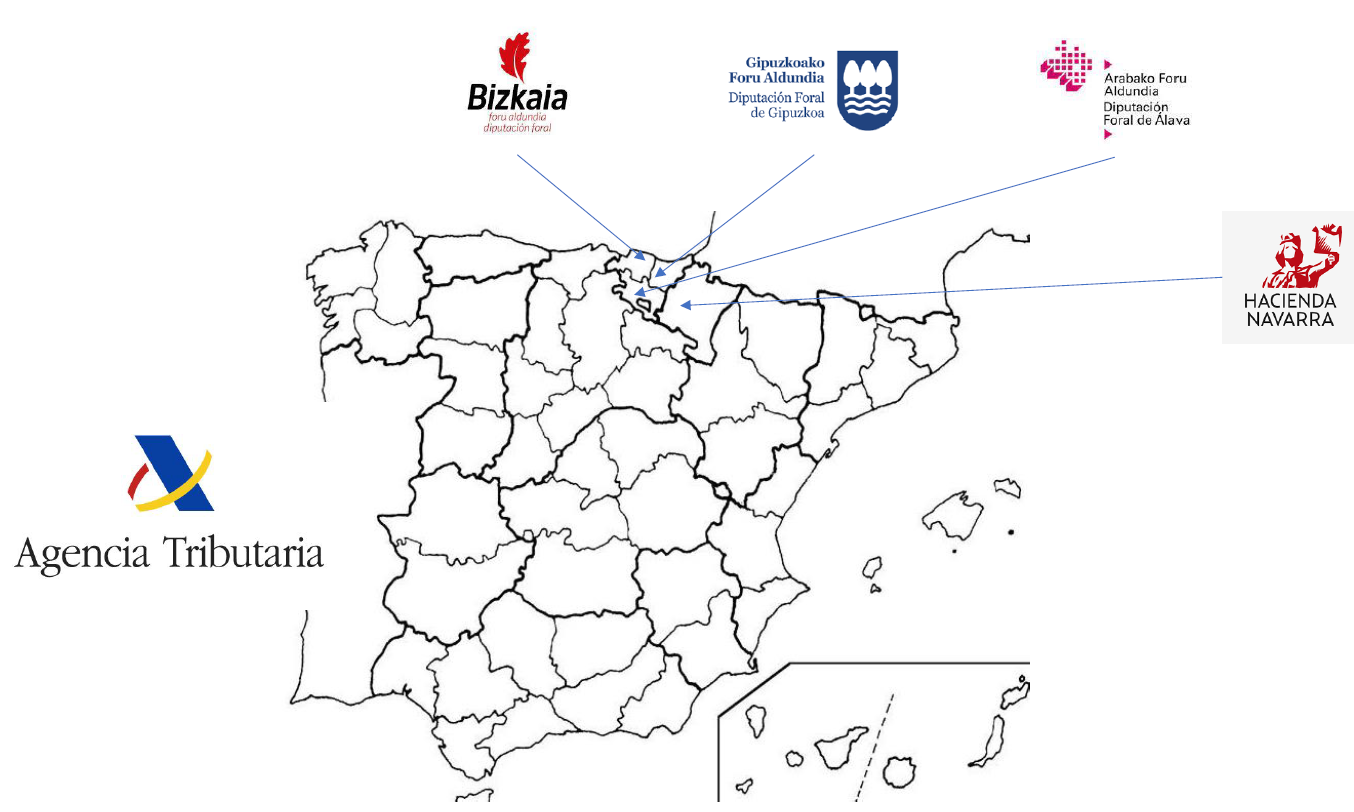
Focusing on Tax Reporting, it is important to note that different tax regimes exist depending on the company's tax jurisdiction. In Spain, several tax authorities with their own regulations coexist, so the applicable system depends on the company's registered address: Bizkaia, Gipuzkoa, Álava, Navarra, or the rest of the country (Spanish Tax Agency - AEAT).
In Bizkaia there is also the Batuz system, which complements TicketBAI. SDH automatically integrates sales invoice information into Batuz, while the customer's accounting system handles the management of purchase invoices.
Within the Spanish Tax Agency (AEAT), companies already operating under the SII system are considered compliant with their tax reporting obligations and therefore do not need to implement Veri*Factu.
This typically applies to companies with a turnover exceeding €6 million.
However, this exception does not apply in the Basque Country and Navarre, where TicketBAI is used.
Regarding Electronic Invoicing between businesses and professionals (B2B), it's not simply a matter of issuing invoices digitally, but rather operating within an interoperable ecosystem that requires structured formats, traceability, status updates, and connectivity with public and private platforms.
This affects businesses and professionals with headquarters, a permanent establishment, or domicile in Spain who carry out B2B transactions when the recipient is another business or professional.
This regulation applies to taxpayers subject to any of the Tax Reporting regulations.
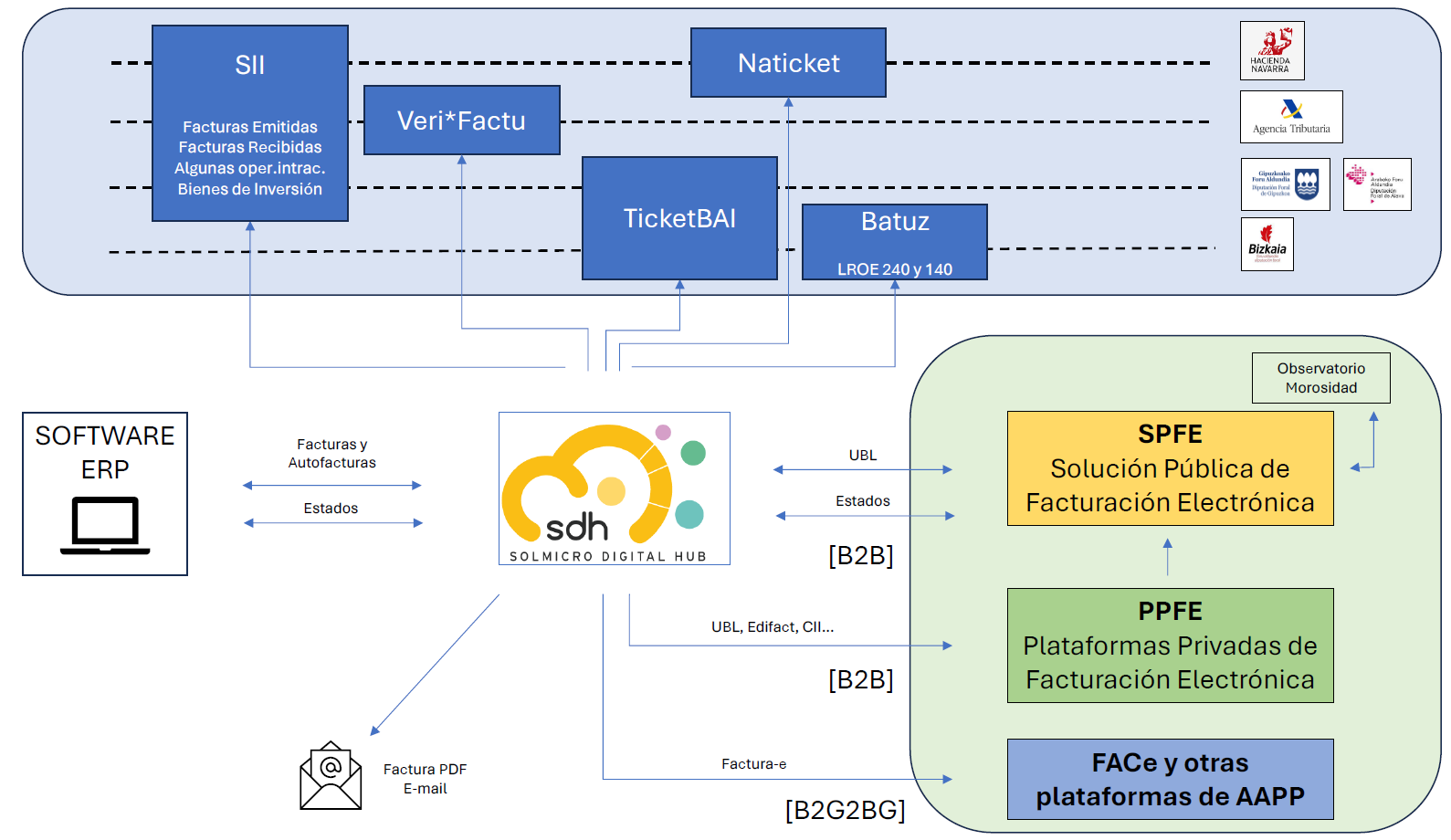
To that end, below we describe how a third‑party application must integrate and how it must use the web service.
Information
SDH currently only implements the Veri*Factu regulation in 'Veri*Factu' mode.
Important
It is necessary to be always connected to the internet for the entire information flow to work correctly.
Canonical Format
SDH has developed agnostic formats for the regulations it implements, in order to facilitate integration and use of the service. On the page for each regulation you can consult the data required to comply with it. With this approach, it is possible to generate several destination formats from a single agnostic input format.
If the input has to generate several destinations, all the data required by the different destinations must be filled in to guarantee correct compliance for all of them.